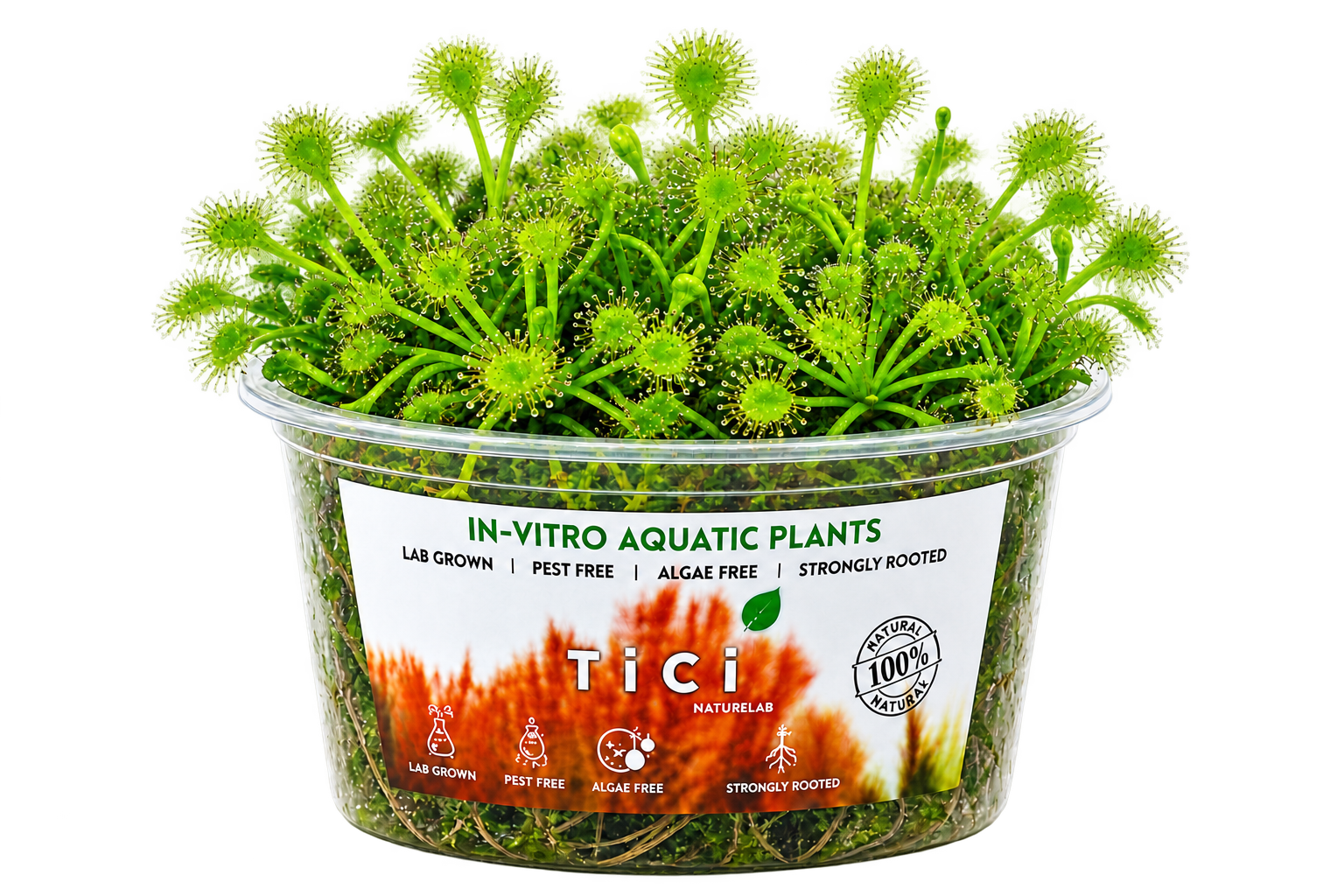
Drosera spatulata
Scientific Name: Drosera spatulata
Common Name: Spoon-leaved Sundew
Origin: Australia, Southeast Asia, East Asia, and parts of Oceania
Growth Rate: Moderate to Fast
Difficulty Level: Easy to Moderate
Temperature: 18–30°C
pH: 4.5–6.5
Humidity: 60–90%
Growing Medium: Nutrient-poor, acidic, moisture-retentive medium
Bright light is recommended for healthy and compact growth.
Moderate to high lighting encourages stronger red coloration on the leaves and tentacles.
Insufficient light may result in greener leaves and elongated growth.
In terrariums, provide adequate artificial lighting while avoiding excessive heat buildup.
Use RO, distilled, or rainwater with very low mineral content.
Keep the growing medium consistently moist.
The tray method is suitable for maintaining stable moisture levels.
Do not allow the substrate to dry out completely.
Avoid regular tap water, as mineral accumulation can damage the plant over time.
Prefers moderate to high humidity, generally around 60–90%.
Adapts well to humid terrarium and paludarium environments.
Good ventilation should be maintained, particularly in enclosed setups.
Excessive stagnant humidity without airflow can encourage mold and fungal problems.
Drosera spatulata naturally grows in nutrient-poor soils.
Do not use conventional fertilizers in the growing medium.
The plant supplements its nutritional requirements by trapping and digesting small insects.
Healthy plants can generally obtain sufficient nutrients through natural prey availability.
Avoid overfeeding, as excessive feeding can stress the plant.
Use an acidic, nutrient-free, moisture-retentive substrate.
Suitable options include peat moss mixed with silica sand or long-fiber sphagnum moss.
Avoid garden soil, compost, manure, and standard potting mixes.
The substrate should remain moist while providing sufficient aeration around the roots.
Easily propagated through seeds and leaf cuttings.
Mature plants can produce flowers and numerous fine seeds.
Allow mature seed capsules to develop and collect the seeds when fully ripe.
Leaf cuttings can be placed on a moist growing medium to encourage new plantlets.
Established plants may also produce offsets naturally.
Best suited for the moist terrestrial section of a terrarium or paludarium.
Works well in open or partially enclosed humid environments.
Can be planted among sphagnum moss, small ferns, and other compatible moisture-loving plants.
Keep it above the waterline and avoid fully submerged conditions.
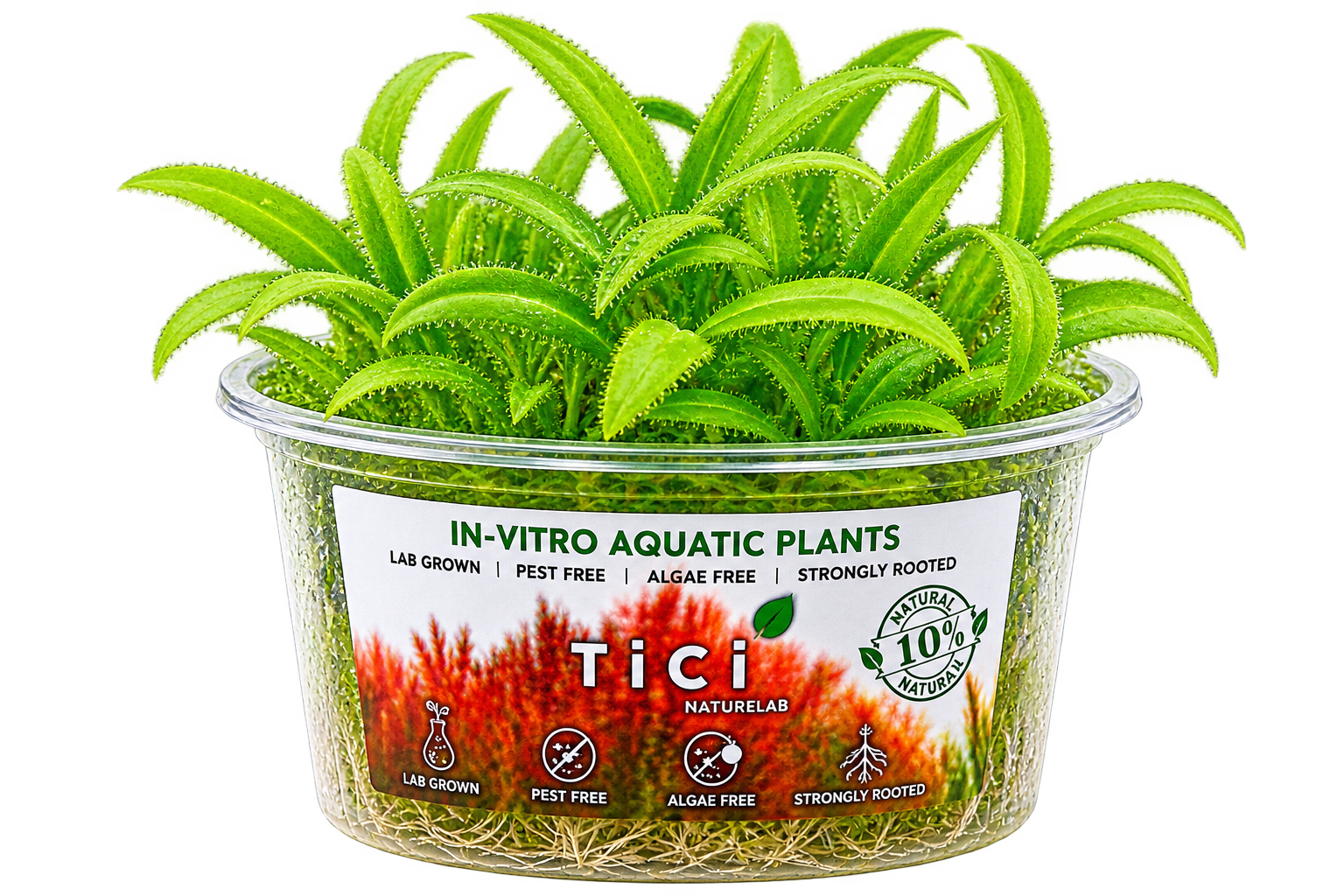
Its compact rosette form makes it suitable for foreground or focal positions in small naturalistic displays.
Disclaimer: Images are for visual representation and understanding only. Actual appearance may vary.