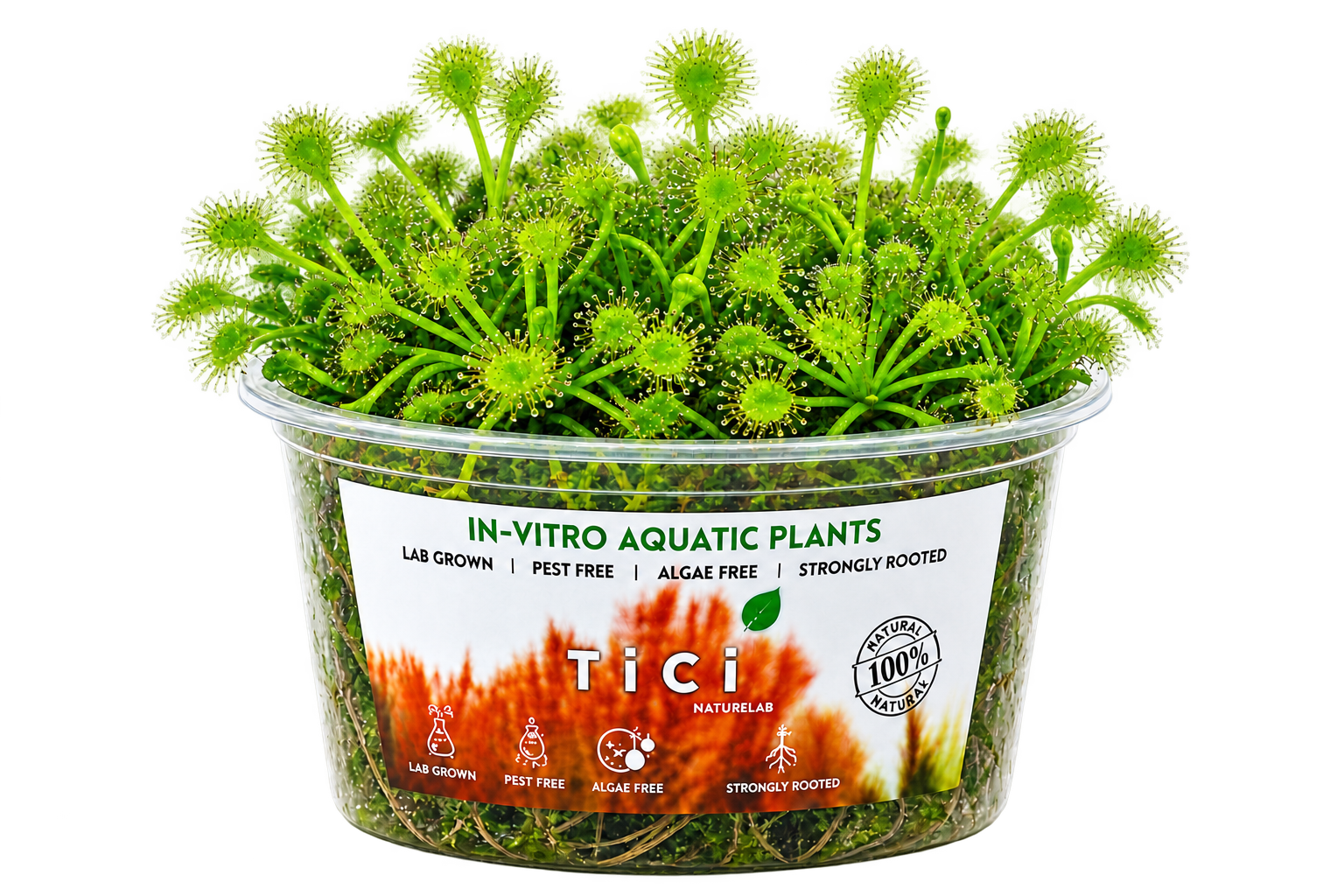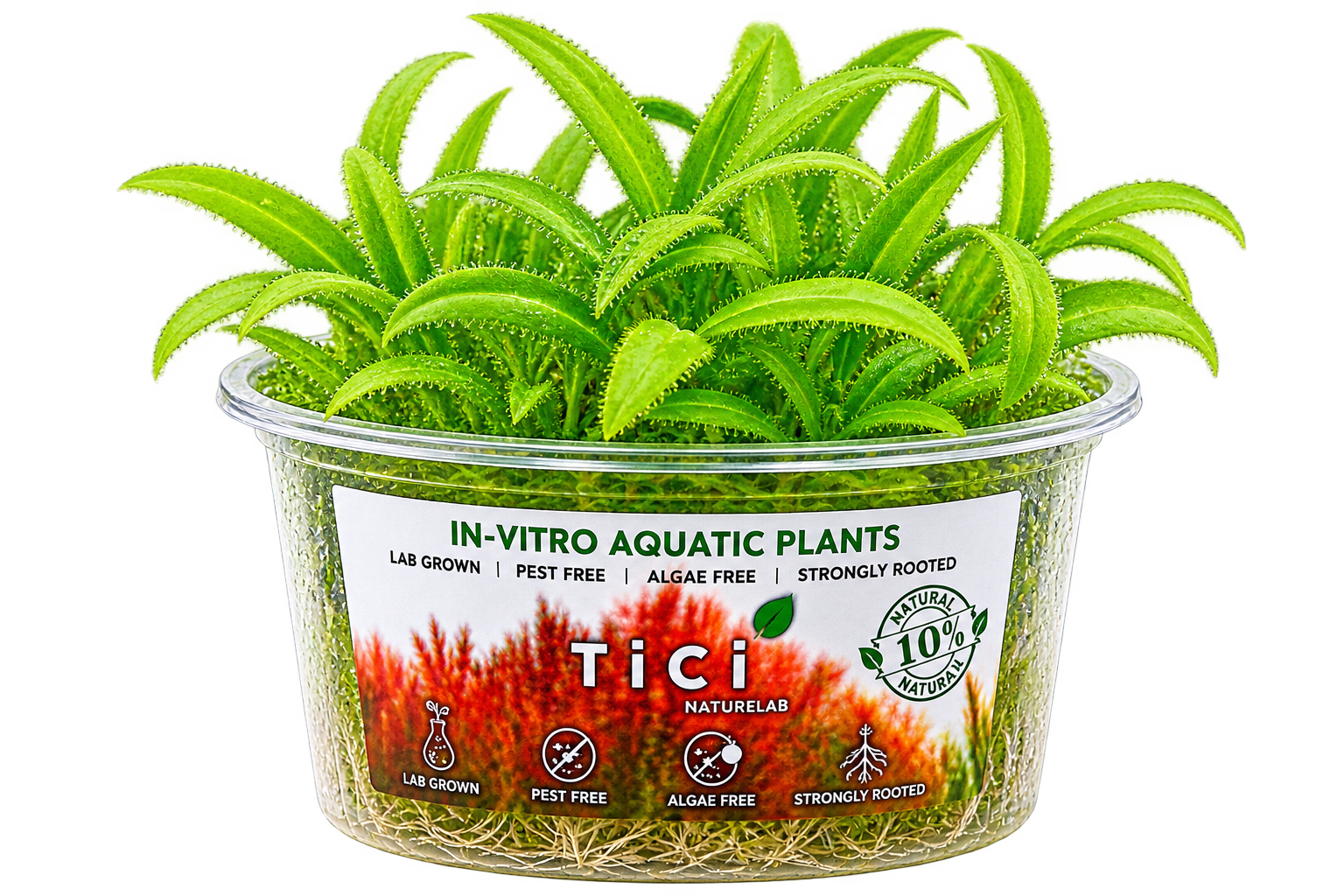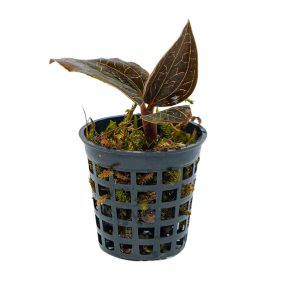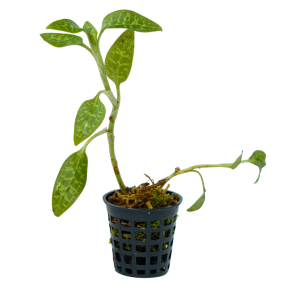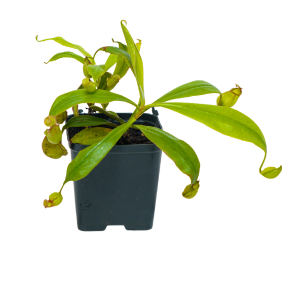
Nepenthes Green
Scientific Name: Nepenthes sp. 'Green'
Common Name: Green Pitcher Plant
Origin: Southeast Asia
Growth Rate: Moderate
Difficulty Level: Moderate
Temperature: 20–30°C during the day; 16–24°C at night
pH: 4.5–6.5
Humidity: 70–90%
Growing Medium: Airy, acidic, nutrient-poor medium
Bright, filtered or indirect light is recommended.
Moderate to high lighting promotes healthy leaf growth and better pitcher development.
Avoid harsh midday direct sunlight, particularly in enclosed terrariums, as it can cause leaf burn and excessive heat.
Insufficient light may result in slow growth and reduced pitcher production.
Use RO, distilled, or rainwater with very low mineral content.
Keep the growing medium consistently moist but never permanently waterlogged.
Water thoroughly and allow excess water to drain freely.
Unlike many terrestrial carnivorous plants, Nepenthes generally performs best when it is not kept sitting in a tray of water.
Avoid tap water with high levels of dissolved minerals.
Prefers high humidity, generally around 70–90%.
Stable humidity encourages healthy pitcher formation.
Terrariums and paludariums can provide suitable humidity when adequate ventilation is maintained.
High humidity without sufficient airflow can encourage fungal and bacterial problems.
Nepenthes naturally grows in nutrient-poor environments and obtains additional nutrients through its pitchers.
Do not use conventional fertilizers in the growing medium.
The pitchers contain digestive fluid that helps break down captured insects.
Small insects can occasionally be provided if the plant does not have access to natural prey.
Avoid overfeeding or placing large amounts of food inside the pitchers.
Requires a loose, airy, acidic, and nutrient-poor substrate.
Suitable mixes include long-fiber sphagnum moss with perlite, orchid bark, or other aerating materials.
The medium should retain moisture while allowing excellent drainage and air circulation around the roots.
Avoid garden soil, compost, manure, and ordinary nutrient-rich potting soil.
Commonly propagated through stem cuttings.
Select a healthy stem and prepare cuttings containing suitable nodes.
Place the cutting in a moist, airy rooting medium and maintain high humidity.
Propagation from seed is also possible but generally requires more time and controlled conditions.
Young plants should be protected from excessive heat and direct sunlight while establishing.
Best suited to the humid terrestrial or elevated planting zone of a terrarium or paludarium.
Can be grown in hanging positions or allowed to climb naturally.
Suitable for backgrounds, elevated sections, and areas where its pitchers can hang freely.
Keep the roots above standing water and provide adequate air circulation.
Its hanging pitchers make it an excellent vertical focal plant in naturalistic displays.
Disclaimer: Images are for visual representation and understanding only. Actual appearance may vary.