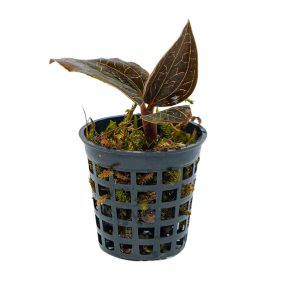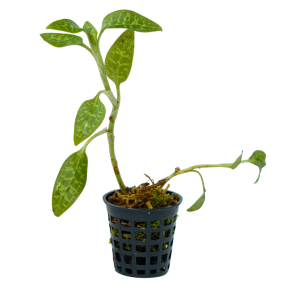
Scientific Name: Cystorchis sp.
Common Name: Jewel Orchid / Jewel Orchid Relative
Origin: Tropical Southeast Asia
Growth Rate: Slow to moderate
Difficulty Level: Moderate
Temperature: 20–27°C during the day; 17–23°C at night
pH: 5.0–6.5
Humidity: 70–90%
Growing Medium: Moist, airy, acidic, and organic-rich but well-drained medium
Air Movement: Gentle and continuous ventilation is recommended
Low to moderate, bright filtered or indirect light is recommended.
Diffused lighting helps maintain healthy foliage and supports compact growth.
Avoid strong direct sunlight, which can scorch the leaves and cause stress.
Excessively intense lighting may also reduce the attractive coloration and markings of the foliage.
Very low light can result in weak, elongated growth and slower development.
In terrariums and paludariums, position it beneath taller plants or in shaded forest-floor areas.
Use RO, distilled, or rainwater with low mineral content.
Keep the growing medium consistently moist but never saturated.
Water thoroughly and allow excess water to drain freely.
Do not allow the substrate to remain completely dry for prolonged periods.
Avoid standing water around the roots and crown.
Water should preferably be applied to the substrate rather than repeatedly wetting the foliage and crown.
Good drainage and oxygenation around the roots are important for preventing root rot.
Prefers high humidity, generally around 70–90%.
Stable humidity supports healthy leaf development and new growth.
Performs well in humid terrariums, vivariums, and paludariums when adequate ventilation is provided.
Avoid completely stagnant, sealed conditions for extended periods.
Good air circulation is particularly important when humidity remains consistently high.
Requires relatively low nutrient levels.
Use fertilizers very sparingly and at highly diluted concentrations.
A weak, balanced orchid fertilizer may occasionally be used during active growth if required.
Avoid strong fertilizers or excessive nutrient accumulation in the substrate.
Organic matter within the growing medium can provide a gentle, slow-release nutrient source.
Flush the growing medium occasionally if mineral accumulation is suspected.
Requires a loose, acidic, moisture-retentive, and well-aerated substrate.
Suitable mixes include fine sphagnum moss, fine orchid bark, coco fibre, and perlite.
A small amount of natural leaf litter or decomposed organic material can be incorporated into the medium.
The substrate should retain consistent moisture while allowing excellent root aeration.
Avoid heavy garden soil, clay-rich soil, manure, and dense conventional potting mixes.
Ensure the crown and creeping stems are not buried too deeply, as prolonged moisture around these areas may encourage rot.
Can be propagated through stem cuttings or division, depending on the growth habit of the particular species.
Healthy creeping stems with established nodes can be separated and replanted into a suitable moist medium.
Division should preferably be performed on established plants with multiple healthy growth points.
Maintain high humidity and stable moisture while newly propagated sections establish their roots.
Seed propagation is possible in orchids but is considerably more complex and generally requires specialized conditions and appropriate fungal associations for successful germination.
Best suited to the shaded terrestrial or forest-floor section of a terrarium or paludarium.
Plant directly into a moist, well-drained substrate rather than placing the roots in standing water.
Excellent for naturalistic tropical forest-floor displays beneath branches, mosses, and larger foliage plants.
Its attractive foliage makes it particularly suitable for foreground and midground planting.
Provide enough space for its creeping growth habit to develop naturally.
Avoid areas exposed to intense lighting or constant water flow.
The subtle foliage patterns and compact growth make Cystorchis sp. an excellent understory jewel-orchid plant for humid tropical setups.
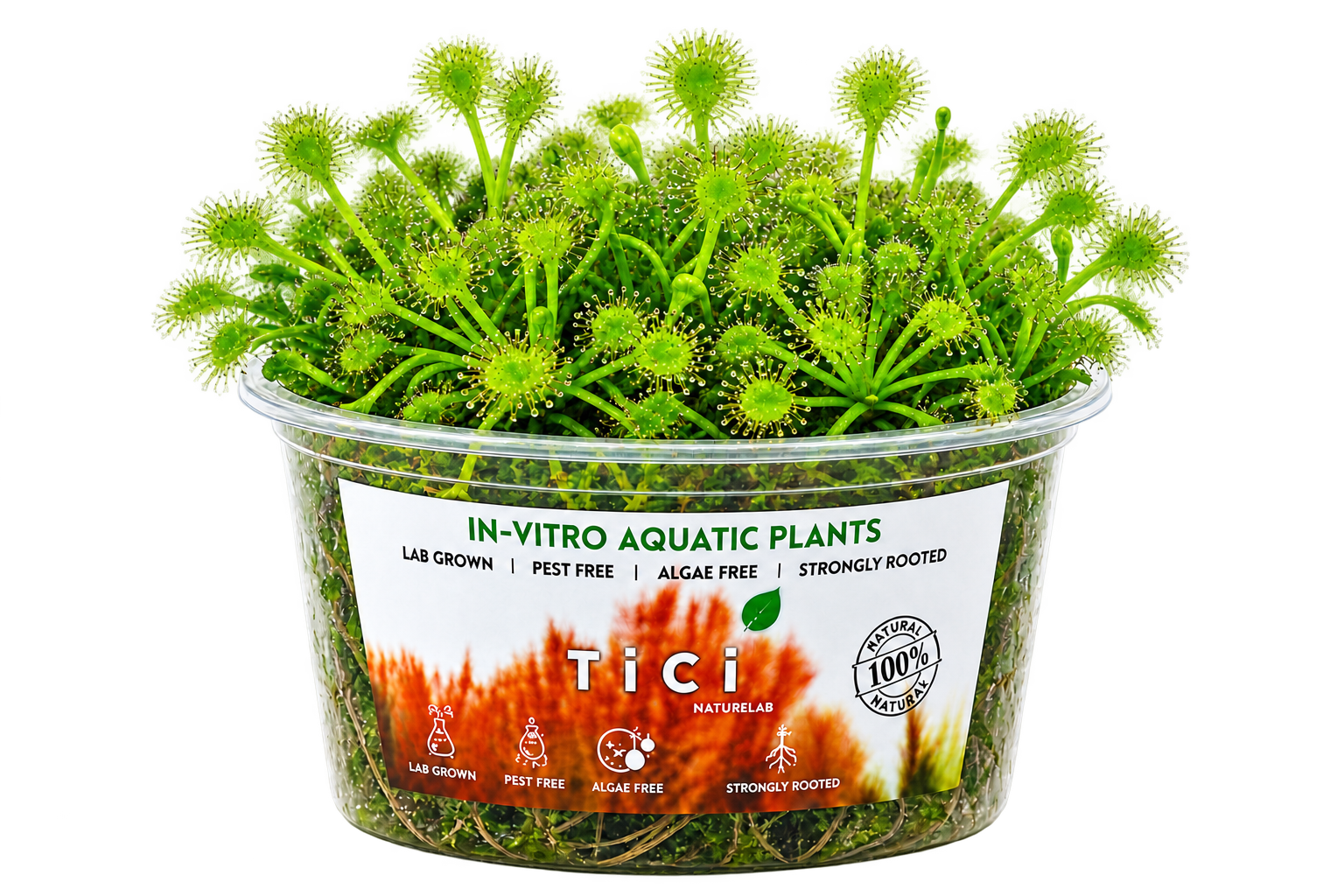
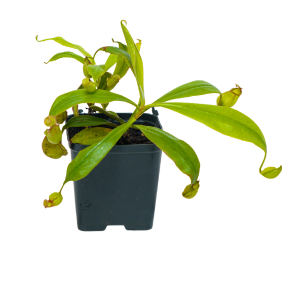
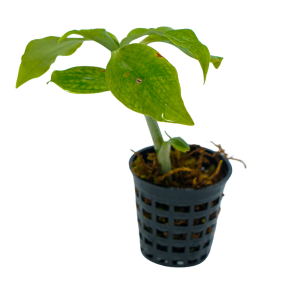
Disclaimer: Images are for visual representation and understanding only. Actual appearance may vary.