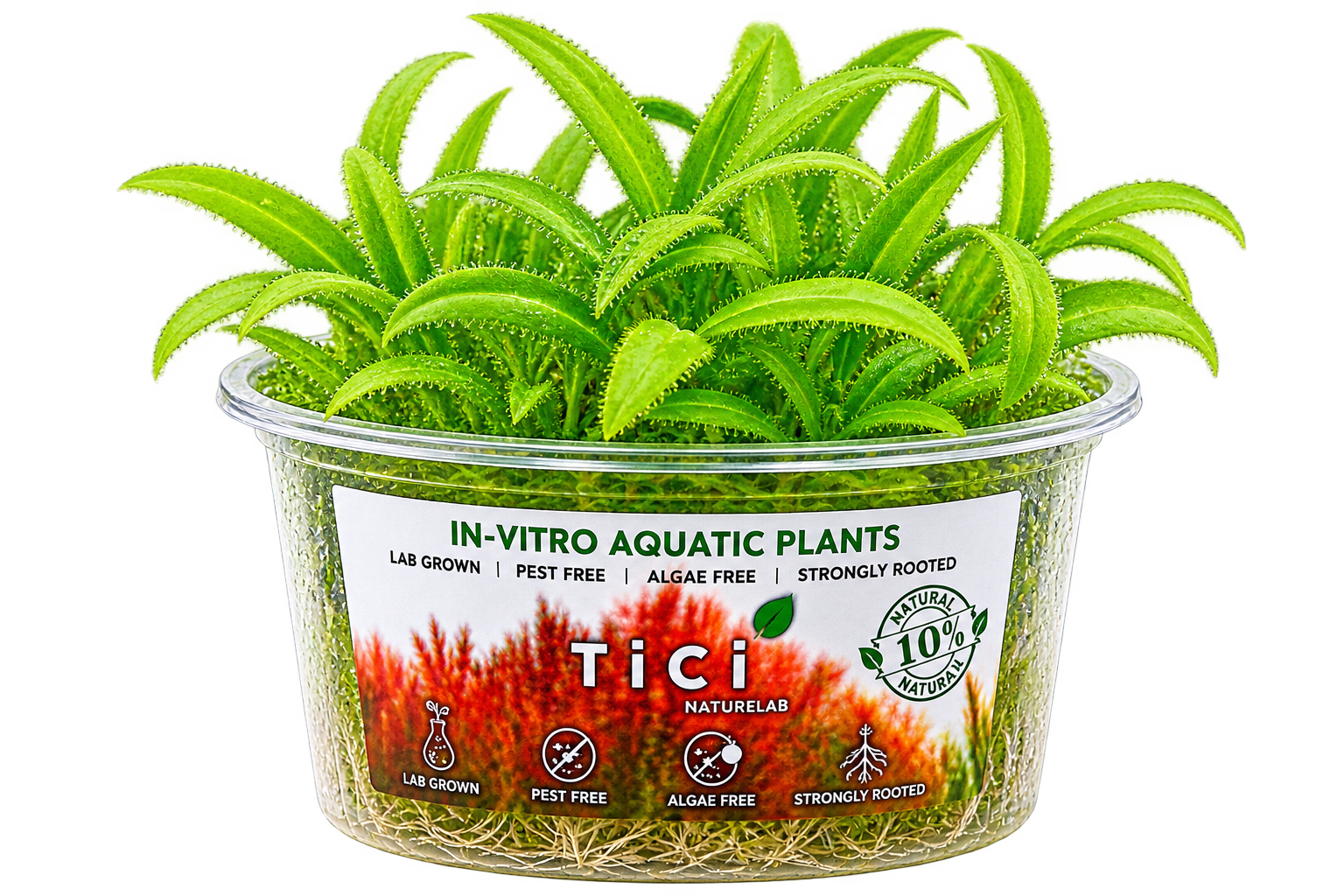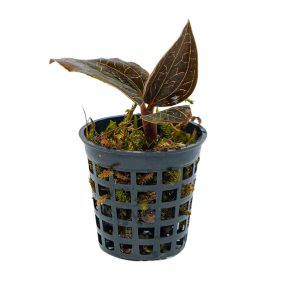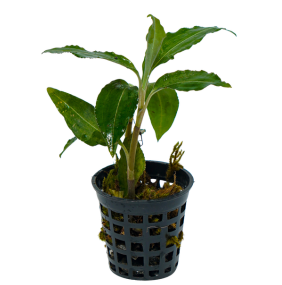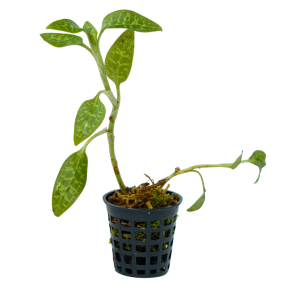
Scientific Name: Goodyera diabuzanensis
Common Name: Jewel Orchid
Origin: East Asia
Growth Rate: Slow to moderate
Difficulty Level: Moderate
Temperature: 18–27°C during the day; 15–22°C at night
pH: 5.0–6.5
Humidity: 70–90%
Growing Medium: Moist, airy, slightly acidic, and well-drained organic medium
Air Movement: Gentle to moderate ventilation is recommended
Low to moderate, bright filtered or indirect light is recommended.
Diffused lighting helps maintain healthy foliage and supports compact growth.
Moderate light can enhance the attractive markings and venation of the leaves.
Avoid strong direct sunlight, which can scorch or discolor the delicate foliage.
Excessively intense lighting combined with high temperatures may cause leaf stress.
Very low light can result in elongated growth, weaker leaves, and slower development.
In terrariums and paludariums, position the plant in a shaded forest-floor or understory area.
Use RO, distilled, or rainwater with low mineral content.
Keep the growing medium consistently moist but never waterlogged.
Water thoroughly and allow excess water to drain freely.
Avoid allowing the substrate to dry completely for prolonged periods.
Do not keep the root zone continuously submerged in water.
Water around the substrate rather than repeatedly wetting the crown.
Good drainage and root aeration are essential for preventing root and stem rot.
Prefers high humidity, generally around 70–90%.
Stable humidity supports healthy foliage, root development, and new growth.
Performs well in humid terrariums, vivariums, and paludariums when combined with adequate ventilation.
Avoid prolonged stagnant or completely sealed conditions.
Gentle air circulation helps reduce the risk of fungal and bacterial problems.
Requires relatively low nutrient levels.
Use fertilizers very sparingly and at highly diluted concentrations.
A weak, balanced orchid fertilizer may occasionally be applied during active growth if necessary.
Avoid concentrated fertilizers, which can damage the sensitive root system.
Organic matter naturally present in the growing medium can provide a gentle nutrient source.
Occasional flushing with low-mineral water can help prevent fertilizer and mineral accumulation.
Requires a loose, moisture-retentive, slightly acidic, and well-aerated substrate.
Suitable mixes include fine sphagnum moss, fine orchid bark, coco fibre, and perlite.
A small quantity of leaf litter or decomposed organic material can be incorporated into the medium.
The substrate should remain evenly moist while providing excellent root aeration.
Avoid garden soil, heavy clay, manure, and dense conventional potting mixes.
Do not bury the crown deeply, as excessive moisture around the crown can encourage rot.
Can be propagated through stem cuttings or division from established plants.
Healthy creeping stems with suitable nodes can be separated and placed into a moist, airy rooting medium.
Division is best performed when the plant has multiple healthy growth points.
Maintain high humidity and consistent moisture while newly propagated sections establish their roots.
Seed propagation is possible but considerably more complex and generally requires specialized orchid propagation techniques and suitable fungal associations for germination.
Best suited to the shaded terrestrial or forest-floor section of a terrarium or paludarium.
Plant directly into a moist, well-drained substrate rather than placing the roots in standing water.
Excellent for naturalistic temperate-to-tropical forest-floor displays beneath larger plants, branches, and mosses.
Its patterned foliage makes it particularly suitable for foreground and midground planting.
Allow sufficient space for the creeping stems to spread naturally.
Avoid intense lighting, excessive heat, and locations where water continuously collects around the crown.
The attractive foliage and contrasting venation make Goodyera diabuzanensis an excellent understory jewel orchid and focal foliage plant for humid naturalistic displays.
Disclaimer: Images are for visual representation and understanding only. Actual appearance may vary.