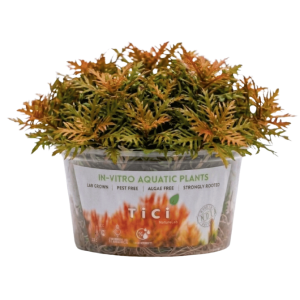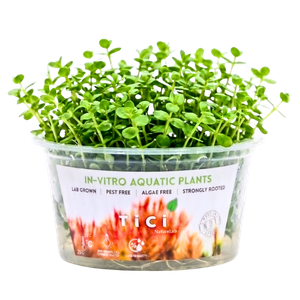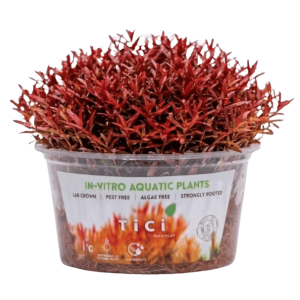
Scientific Name: Rotala rotundifolia 'Blood Red'
Common Name: Blood Red Rotala
Origin: Cultivated variety of Rotala rotundifolia
Growth Rate: Moderate to Fast
Difficulty Level: Moderate
Temperature: 22–28°C
pH: 5.5–7.5
GH: 2–10 dGH
KH: 0–6 dKH
High lighting is recommended to achieve the plant's signature deep red coloration.
Strong light promotes compact growth, shorter internodes, and intense crimson-red leaves.
Under lower light conditions, the plant tends to display orange, pink, or greenish-red hues.
CO₂ supplementation is highly beneficial.
Encourages faster growth, denser foliage, and richer coloration.
While the plant can grow without CO₂, its full ornamental potential is best achieved in a CO₂-enriched aquarium.
Requires a balanced supply of macro and micronutrients.
Adequate nitrate, phosphate, potassium, and trace elements support healthy growth.
Iron supplementation helps maintain vibrant red pigmentation.
Consistent fertilization is important for preventing color loss and stunted growth.
Best suited for the midground to background.
Frequently used as a colorful focal point or background accent.
Creates stunning contrast when combined with bright green aquatic plants.
Easily propagated through stem cuttings.
Cut healthy tops and replant them into the substrate.
Remaining stems readily produce side shoots, resulting in dense bushes.
Maintain stable lighting, CO₂, and nutrient levels to preserve intense coloration.
Regular trimming encourages bushier growth and prevents overcrowding.
Plant stems in groups for a more dramatic visual impact.
Good water circulation helps maintain healthy growth and minimizes algae issues.
Rotala rotundifolia 'Blood Red' is one of the most popular red stem plants in aquascaping, prized for its ability to develop intense blood-red foliage under favorable conditions. Its vibrant coloration, graceful growth habit, and ease of shaping through trimming make it an excellent choice for Nature, Dutch, and high-tech planted aquariums. With strong lighting, stable CO₂ supplementation, and balanced fertilization, it forms dense, brilliant red groups that create striking contrast and visual depth within the aquascape.