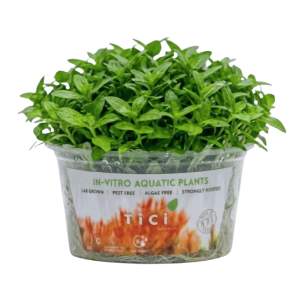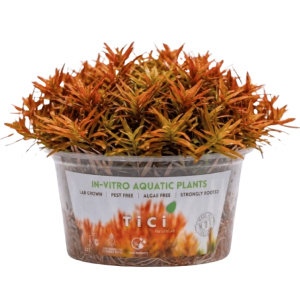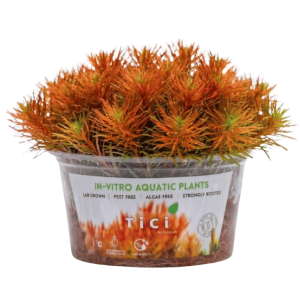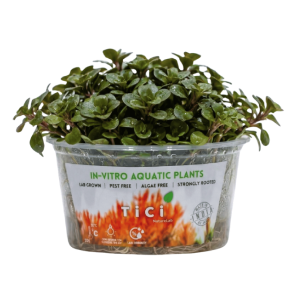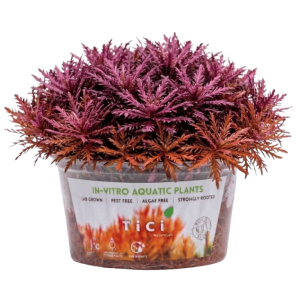
Scientific Name: Pogostemon stellatus 'Dassen'
Common Name: Pogostemon Dassen
Origin: Cultivated variant of Pogostemon stellatus
Growth Rate: Moderate to Fast
Difficulty Level: Moderate to Advanced
Temperature: 22–28°C
pH: 5.5–7.5
GH: 2–10 dGH
KH: 0–6 dKH
High lighting is recommended for optimal growth and coloration.
Strong light promotes compact growth and enhances pink, orange, red, and purple hues in the upper leaves.
Under lower light conditions, the plant becomes greener and develops longer internodes.
CO₂ supplementation is highly beneficial.
Encourages vigorous growth, dense foliage, and improved coloration.
Stable CO₂ levels help maintain healthy stems and prevent lower leaf loss.
Requires regular supplementation of macro and micronutrients.
Adequate nitrate, phosphate, potassium, magnesium, and trace elements support robust growth.
Iron supplementation helps intensify red and purple coloration.
Nutrient-rich conditions are essential for maintaining vibrant foliage and healthy shoot development.
Best suited for the midground to background.
Often used as a colorful focal plant due to its star-shaped leaf arrangement.
Creates a striking contrast with green stem plants and carpeting species.
Easily propagated through stem cuttings.
Cut healthy stem tops and replant them into the substrate.
Remaining stems typically produce side shoots after trimming.
Regular trimming encourages bushier growth and prevents excessive shading.
Plant stems in groups for a fuller and more dramatic appearance.
Stable water parameters, CO₂ levels, and fertilization are important for optimal coloration.
Good water circulation promotes healthy growth and nutrient distribution.
Pogostemon stellatus 'Dassen' is a highly decorative stem plant admired for its star-shaped leaf arrangement and vibrant coloration. Its unique structure and ability to develop shades of green, orange, pink, red, and purple make it an excellent focal point in Nature, Dutch, and high-tech planted aquariums. With strong lighting, stable CO₂ supplementation, and balanced fertilization, it forms dense, colorful groups that add texture, depth, and visual impact to aquascapes.