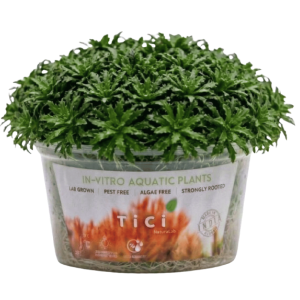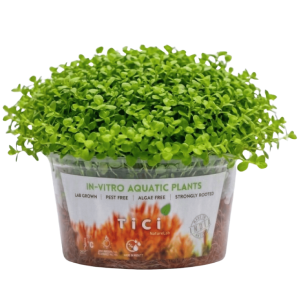
Scientific Name: Hemianthus micranthemoides
Common Name: Pearl Weed, Baby Tears (often sold under this name)
Origin: North America
Growth Rate: Fast
Difficulty Level: Easy to Moderate
Temperature: 20–28°C
pH: 5.5–7.5
GH: 2–12 dGH
KH: 0–8 dKH
Moderate to high lighting is recommended.
High light promotes compact growth and dense bush formation.
Under low light, stems become elongated and less compact.
CO₂ supplementation is highly beneficial.
Encourages dense growth, smaller leaves, and faster spreading.
Can grow successfully without CO₂, making it suitable for both low-tech and high-tech aquariums.
Requires regular supplementation of macro and micronutrients.
Adequate nitrate, phosphate, potassium, and trace elements support vigorous growth.
Benefits from both water column fertilization and nutrient-rich substrates.
Consistent nutrient availability promotes dense, healthy foliage.
Suitable for the foreground, midground, and background.
Can be used as a carpeting plant with frequent trimming.
Commonly used to create dense bushes and natural-looking transitions in aquascapes.
Easily propagated through stem cuttings.
Cut healthy tops and replant them into the substrate.
Trimmed stems readily produce side shoots, resulting in thicker growth.
Frequent trimming encourages compact, bushy growth.
Plant stems in groups for a lush appearance.
Maintain stable nutrient and CO₂ levels for best results.
Responds exceptionally well to regular pruning and shaping.
Hemianthus micranthemoides is a versatile and highly popular stem plant known for its small, bright green leaves and rapid growth. Its adaptability allows it to be used as a carpet, midground bush, or background filler, making it one of the most flexible plants in aquascaping. With adequate lighting, balanced fertilization, and optional CO₂ supplementation, it forms lush, vibrant green masses that add texture, depth, and a natural appearance to Nature, Dutch, and high-tech planted aquariums.